

Permission to send alerts isn't permission to send offers
Apple's App Store rules allow promotional push notifications only if users explicitly agree to receive them through a prompt or other consent language in the app. The app must also give users a way to stop those messages. Simply allowing an app to send notifications does not meet the separate requirement for marketing consent.
MacRumors reporter Joe Rossignol said he received promotional pushes in Canada from Cineplex, McDonald's and Wendy's without finding a way to turn off just the offers. He reported a different problem with the food delivery app Skip: it had a promotional notification switch, but offers kept arriving after he turned it off. The report does not show how widespread either problem is or whether Apple took action in these cases.
Sources: Apple Has an iPhone Notifications Problem.

Promotions can also appear in Live Activities
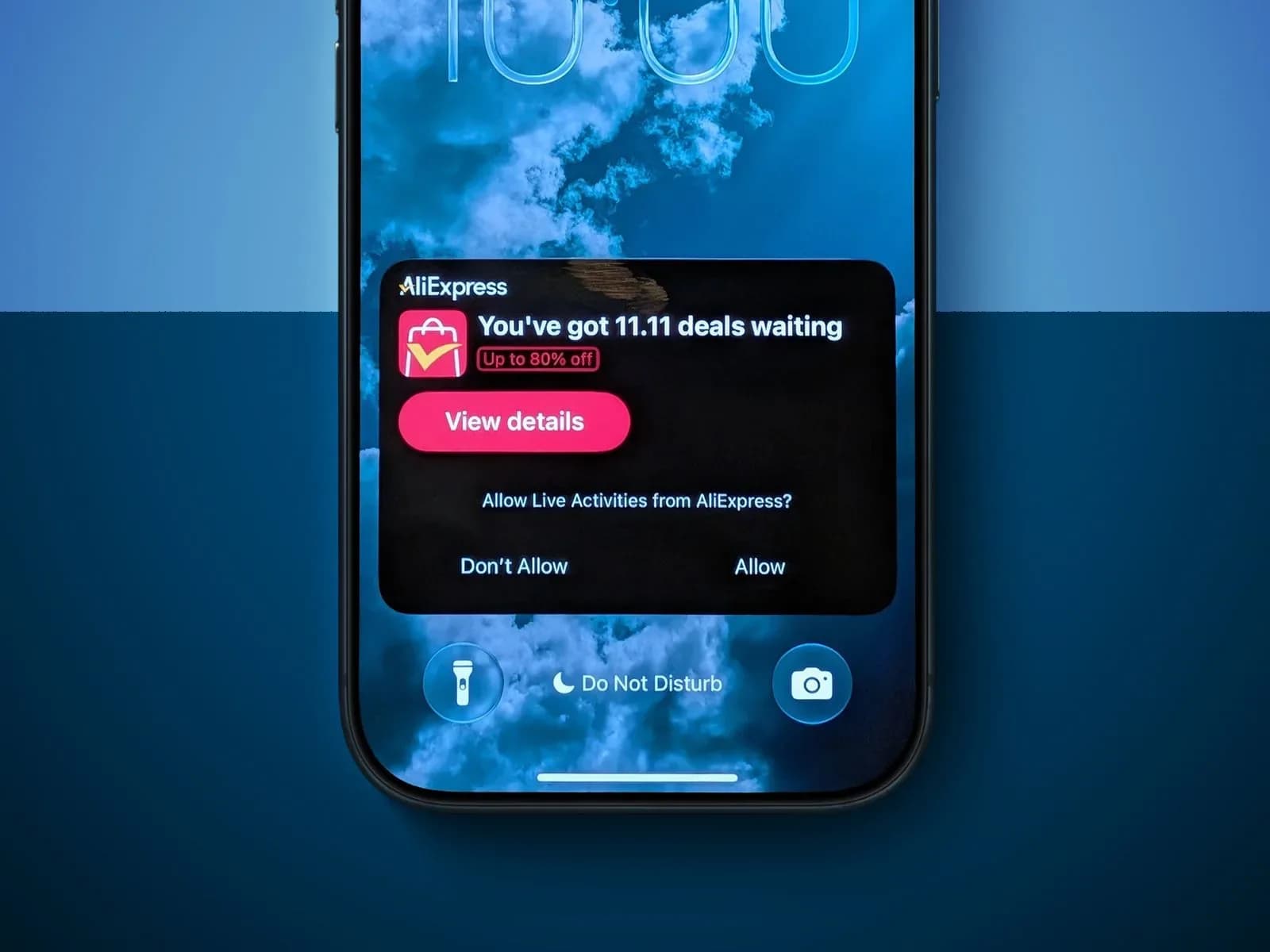
MacRumors readers reported seeing AliExpress promotions in Live Activities. Apple's design guidance advises developers not to use Live Activities for ads or promotions. Its App Store review rules separately say apps should not use Live Activities to send unsolicited messages.
Sources: Apple Has an iPhone Notifications Problem.
What a marketing-only switch preserves
A working opt-out lets users stop offers without giving up other notifications from the same app. For example, someone ordering dinner could keep an alert that the delivery has arrived without getting a coupon the next day. Turning off all notifications from the app would block both.
MacRumors also reported that Apple's App Store sent a push promoting a Paramount+ subscription deal. Users can turn off future offers by opening the App Store, tapping their profile picture, choosing Notifications and switching off Recommendations & Offers. The report did not establish whether recipients had explicitly opted in, and it noted that the preinstalled App Store is not subject to Apple's rules for third-party apps. The switch can stop future offers, but its presence doesn't show whether users asked for the first one.